
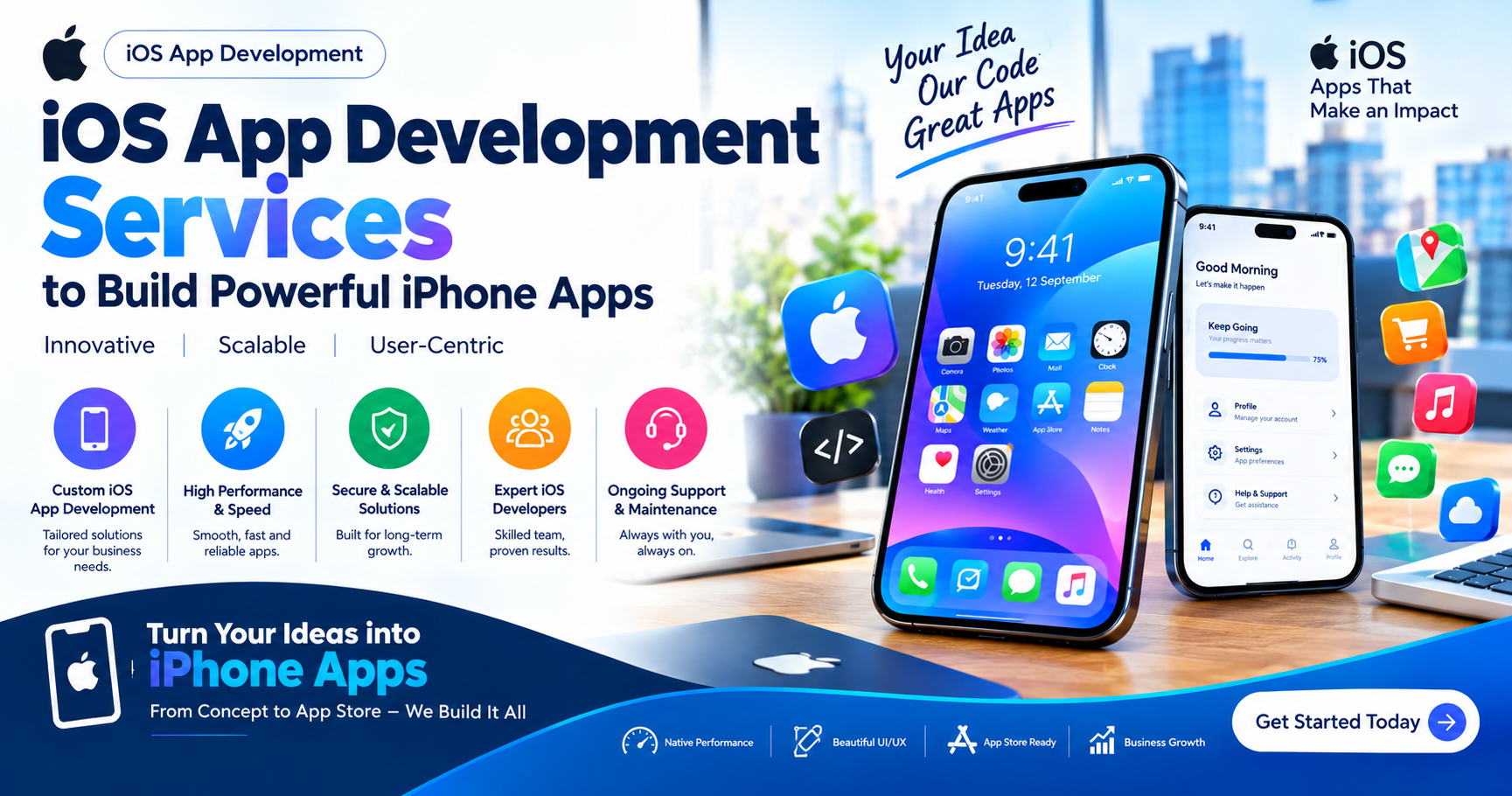
In today’s digital world, mobile applications have become an essential part of business growth. From online shopping and healthcare to education and finance, businesses are using mobile apps to improve customer experiences, simplify operations, and increase revenue. iOS App Development Services help businesses build powerful, secure, and user-friendly applications for Apple devices, including iPhones and iPads.
With millions of people using Apple devices worldwide, investing in iOS app development can help businesses reach a valuable audience and strengthen their digital presence. Whether you are a startup with a new app idea or an established enterprise looking to improve your services, a professionally developed iOS application can support your business goals.
Custom iPhone applications allow businesses to offer personalized experiences, improve customer engagement, and provide convenient access to products and services. By choosing the right development strategy, companies can create scalable applications that meet customer expectations and adapt to changing market demands.
What Are iOS App Development Services?
iOS app development services involve designing, developing, testing, launching, and maintaining mobile applications for Apple’s operating systems. These applications are built to work on supported Apple devices and follow Apple’s technical and design guidelines.
Professional developers use technologies such as Swift, SwiftUI, and Apple’s development tools to create applications that deliver smooth performance and a consistent user experience.
Depending on business requirements, iOS app development may include custom app development, UI/UX design, third-party API integration, payment gateway integration, app testing, App Store submission, and ongoing maintenance.
The main objective is to develop an application that solves real customer problems while providing reliable performance, strong security, and easy navigation.
Why Is iOS App Development Important for Businesses?
1. Reach Apple Device Users
Developing an iPhone application gives businesses another channel to connect with customers who prefer using Apple devices. A dedicated mobile app can make it easier for users to explore services, place orders, access information, and communicate with a business.
Companies can use their applications to build stronger relationships with existing customers while reaching new audiences.
2. Deliver an Excellent User Experience
A well-designed iOS application provides intuitive navigation, responsive interfaces, and convenient features. Users should be able to complete important tasks without unnecessary steps.
Professional iOS app development focuses on usability, accessibility, consistent design, and performance to create a positive experience across supported devices.
3. Strengthen Business Security
Security is an important consideration when developing applications that handle personal information, payments, or business data.
Developers can implement secure authentication, encrypted communication, appropriate data protection measures, and privacy-conscious permissions. They can also integrate supported Apple security features where suitable.
A secure application helps protect users and supports customer confidence, although no application can be guaranteed completely free from security risks.
4. Improve Customer Engagement
Mobile applications provide businesses with opportunities to communicate with customers through features such as push notifications, personalized recommendations, loyalty programs, and in-app messaging.
When these features are relevant and used responsibly, they can encourage customers to return, explore new products, and remain connected with a brand.
5. Support Business Growth
Custom iOS applications can automate processes, improve service delivery, and create additional revenue opportunities. Businesses can introduce new features as customer needs evolve and expand their digital services over time.
A scalable application architecture can also help accommodate increased usage and changing business requirements.
Key iOS App Development Services
Custom iPhone App Development
Custom iPhone app development focuses on creating applications based on your business objectives, target audience, and functional requirements.
Whether you need an e-commerce application, booking platform, social networking app, educational application, or business productivity tool, a custom solution can provide features tailored to your needs.
iPad App Development
iPad applications are useful for businesses that require larger screens, detailed dashboards, interactive learning experiences, or productivity-focused interfaces.
Developers can create responsive layouts that take advantage of the iPad’s screen size while maintaining a consistent experience with other supported Apple devices.
UI/UX Design
User interface and user experience design are essential components of successful mobile applications. The design process includes understanding user needs, planning navigation, creating wireframes, developing prototypes, and testing usability.
An effective UI/UX design makes an application visually appealing, easy to navigate, and accessible to different users.
E-Commerce App Development
E-commerce iOS applications help businesses sell products and services directly through mobile devices. Common features include product catalogs, search filters, shopping carts, secure checkout, order tracking, and customer accounts.
Integration with inventory management, payment services, and delivery systems can help streamline the shopping experience.
API and Third-Party Integration
Many mobile applications rely on external services to provide essential functionality. API integration allows an iOS app to communicate with websites, databases, payment gateways, CRM platforms, and other business systems.
Proper integration helps ensure that information flows efficiently between different platforms.
App Testing and Quality Assurance
Testing helps identify bugs, usability issues, compatibility problems, and performance limitations before an application is released.
Professional testing may include functional testing, device compatibility testing, security checks, performance testing, and user acceptance testing. Regular testing also remains important when an application receives updates.
App Store Deployment and Maintenance
Launching an iOS application involves preparing the app for review, configuring its listing, providing required privacy information, and meeting Apple’s current App Review Guidelines.
After launch, ongoing maintenance can include fixing bugs, improving performance, updating dependencies, and adapting the application to supported iOS versions and changing platform requirements.
Our iOS App Development Process
A structured development process helps keep a project organized and aligned with business objectives.
Step 1: Requirement Analysis
The first step is understanding your business, target audience, app idea, core features, budget, and timeline. This information helps establish a clear development plan.
Step 2: Planning and Strategy
Developers identify the appropriate technology stack, application architecture, integrations, and project milestones. Prioritizing essential features can help control costs and accelerate the initial launch.
Step 3: UI/UX Design
Designers create wireframes and interactive prototypes to demonstrate how users will navigate the application. Feedback is incorporated before full development begins.
Step 4: Application Development
Developers build the application’s frontend and backend components, integrate APIs, configure databases, and implement the required functionality using suitable technologies.
Step 5: Testing and Optimization
The application is tested for functionality, usability, performance, security, and compatibility. Identified issues are resolved before release.
Step 6: App Store Launch
The development team prepares the application for submission, checks its compliance with Apple’s requirements, and supports the release process.
Step 7: Ongoing Support
After launch, updates and improvements help maintain application quality, address user feedback, and introduce new features as business needs change.
Technologies Used in iOS App Development
Modern iOS development uses a combination of programming languages, frameworks, and development tools.
- Swift: Apple’s programming language commonly used for native iOS applications.
- SwiftUI: A framework for building user interfaces across Apple platforms.
- UIKit: A framework used to develop and manage iOS user interfaces.
- Xcode: Apple’s development environment for building, testing, and distributing applications.
- Core Data: A framework for managing and persisting structured application data.
- Cloud Services and APIs: Technologies that support data synchronization, backend functionality, and third-party integrations.
The right technology stack depends on the application’s complexity, performance requirements, integration needs, and long-term maintenance plans.
How Much Does iOS App Development Cost?
The cost of iOS app development depends on several factors, including the number of features, UI/UX complexity, backend requirements, third-party integrations, security needs, and testing scope.
A simple application with basic functionality generally requires less development effort than a complex platform with real-time communication, advanced analytics, or extensive integrations.
Businesses should evaluate the complete project cost, including design, development, testing, hosting where applicable, App Store-related requirements, and ongoing maintenance.
A detailed project assessment helps establish a realistic budget and timeline before development begins.
How to Choose the Right iOS App Development Company
Selecting an experienced development partner is important for creating a reliable application. Before making a decision, review the company’s portfolio, technical expertise, development process, communication practices, and post-launch support.
Ask how the team handles security, testing, project updates, and Apple’s submission requirements. Ensure that the project scope, deliverables, payment terms, and maintenance responsibilities are clearly defined.
The right partner should understand your business objectives and recommend practical solutions rather than adding unnecessary features.
Conclusion
iOS App Development Services to Build Powerful iPhone Apps can help businesses create innovative mobile experiences, connect with Apple device users, and strengthen their digital presence. From custom iPhone and iPad applications to e-commerce platforms, API integrations, and ongoing maintenance, professional development services support businesses throughout the app lifecycle.
By focusing on user experience, security, performance, and scalability, companies can build applications that meet customer needs and support long-term growth.
If you are planning to turn your app idea into reality, begin with a clear strategy, define your essential features, and choose a development approach that aligns with your goals. A well-planned iOS application can become a valuable digital asset for your business.
Frequently Asked Questions (FAQs)
1. What are iOS app development services?
iOS app development services include planning, designing, developing, testing, launching, and maintaining applications for supported Apple devices.
2. How long does it take to develop an iPhone app?
Development time depends on the app’s complexity, features, integrations, and testing requirements. A simple application may take a few weeks, while a more complex solution may require several months.
3. Which programming language is used for iOS app development?
Swift is Apple’s primary modern programming language for native iOS development. Objective-C is also used in existing applications and certain development environments.
4. Can an iOS application be customized for my business?
Yes. Custom iOS applications can be designed around your business processes, target audience, branding, and required features.
5. Do iOS applications require ongoing maintenance?
Yes. Maintenance helps address bugs, improve performance, manage security updates, and maintain compatibility with supported devices and operating system versions.
6. Why should a business invest in iOS app development?
An iOS application can improve customer convenience, support engagement, streamline services, and create additional opportunities for digital growth.